

30 Distribution Transformers for a Nigerian Distributor: 315 kVA and 500 kVA 11 kV and 33 kV
TSTY Electric built and shipped 30 oil-immersed distribution transformers for an independent distributor in Lagos, Nigeria: 15 × 315 kVA and 15 × 500 kVA, in 11/0.415 kV and 33/0.415 kV, 50 Hz, IEC 60076, Dyn11, copper windings. Production took 15–25 days
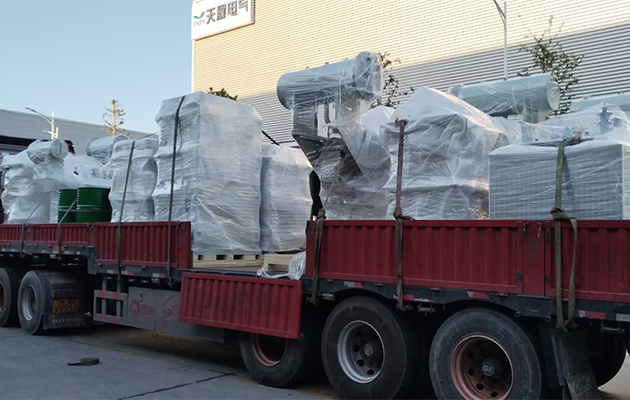
Nigeria Distributor Order Details
|
Item |
Detail |
|
Buyer type |
Independent transformer distributor (stockist), Lagos |
|
Quantity |
30 units — 15 × 315 kVA, 15 × 500 kVA |
|
Voltage class |
11/0.415 kV and 33/0.415 kV, 50 Hz — both classes in the same shipment |
|
Design standard |
IEC 60076 |
|
Cooling |
ONAN |
|
Vector group |
Dyn11 |
|
Winding |
Copper |
|
Total weight |
approx. 80–100 t |
|
Packing |
Fumigation-free plywood case, foam and bubble wrap inside |
|
Loading |
4 × 40HQ |
|
Port of loading |
Qingdao, China |
|
Port of discharge |
Apapa, Lagos |
|
Production lead time |
15–25 days from drawing approval |
|
Onward use |
Resale to estates, factories and DisCo-contracted installers |
Why a Nigeria distributor buys this order from TSTY?
A distributor's profit is fixed before the goods move. Purchase price, freight, duty, VAT and clearing set the landed cost; only then does the resale price matter. Every naira of avoidable cost in that stack is margin.
|
Cost element |
Who controls it |
What changes it |
|
Ex-works / FOB price |
Factory |
Winding material, loss grade, quantity tier |
|
Ocean freight |
Forwarder |
Container count, whether units ship oil-filled, weight per container |
|
Import duty (HS 8504) |
Nigeria Customs, ECOWAS CET rate |
Classification of the specific model |
|
VAT |
Nigeria Customs at import |
7.5% standard rate on the assessed value |
|
Clearing and terminal charges |
Clearing agent |
Port, dwell time, documentation completeness |
|
Inland haulage |
Haulier |
Lagos → destination, unit weight and size |
|
FX and Form M timing |
Buyer's bank |
Naira rate at the date of settlement |
The lever a distributor actually controls is weight per container and per-unit procurement cost. Two 40HQ containers carrying 26 t each cost far less than four carrying 13 t, and consolidating 30 units into one shipment avoids a second set of clearing fees. On this order, container planning was worth more than the unit-price negotiation.
Why the 33 kV and 11 kV mix matters in Nigeria?
Nigeria distributes at two medium-voltage levels: 33 kV on sub-transmission feeders and 11 kV on the primary distribution network, stepping down to 0.415 kV — 415 V line-to-line, 240 V phase-to-neutral — for consumers. A distributor stocking only one class loses roughly half the enquiries it receives, because an estate or factory connection cannot be re-rated to the other class without changing upstream protection, cable and switchgear.
For the same kVA, a 33 kV unit carries a higher insulation level and a more expensive bushing and tap-changer set, so it prices above the 11 kV equivalent. Carrying both classes is what lets a distributor quote the same day instead of losing the order to whoever has the unit on the ground.
How the order was configured
Two ratings only.
1. 15 × 315 kVA and 15 × 500 kVA — the ratings that move, not a project bill of materials spread across eight sizes.
Both voltage classes in one shipment.
2. 11/0.415 kV and 33/0.415 kV travelled together, so the distributor could serve both feeder types from one stock position.
Copper windings.
3. All 30 units copper-wound. Aluminium is available and cheaper, but the Nigerian resale market prices copper units higher and buyers inspect for it, so copper was specified on both ratings.
Dyn11, ONAN, IEC 60076.
4. Standard configuration, drawings approved before production started.
Loss declared per rating.
5. No-load and load loss stated on the nameplate and the test record, so the buyer can compare units on total owning cost rather than purchase price alone.
Container loading: how 30 units were split
Container choice for transformers is decided by weight before volume. A 40HQ holds 76 m³ but only about 26 t of cargo; once the average unit weighs 3 t, the weight ceiling arrives before the floor space runs out.
|
Rating |
Unit weight |
20GP by weight |
40HQ by weight |
40HQ by volume |
|
315 kVA |
2.3–2.8 t |
7 (weight) / 5–6 (volume) |
9–11 |
10–12 |
|
500 kVA |
3.0–3.9 t |
5–6 |
6–8 |
8–10 |
For the 500 kVA unit the weight limit binds: 8 units at 3.9 t is 31.2 t, above the 26 t payload. Capacity is 6 units at the heavy end, 8 at the light end.
This order:
|
Item |
315 kVA |
500 kVA |
Total |
|
Units |
15 |
15 |
30 |
|
Weight |
34.5–42.0 t |
45.0–58.5 t |
79.5–100.5 t |
|
Containers (40HQ) |
2 |
2 |
4 |
|
Average load per container |
— |
— |
20–25 t |
Four 40HQ containers, averaging 20–25 t each, keeps every container inside the 26 t payload limit and leaves the volume for crating and dunnage. If the 500 kVA units are weighed at the top of the range and an even 15/15 split cannot be held, a fifth container is the correct answer — not overloading the fourth.
Reference figures for the alternative: a 20GP takes 33 m³ and about 21 t, which suits 5–6 units of 315 kVA or 4–5 units of 500 kVA. For orders below 10 units a 20GP is usually the cheaper unit of freight.
Packing: fumigation-free cases, and why that matters
Each transformer ships in a fumigation-free plywood case with foam and bubble wrapping inside, and the case boards are specified thicker than the standard export grade because a 315–500 kVA tank sits on the case floor for six to seven weeks.
Two practical consequences:
No fumigation certificate, no ISPM 15 delay.
●ISPM 15 treatment applies to solid-wood packaging. Plywood is processed wood and falls outside that requirement, so the case does not need heat treatment or a phytosanitary certificate, and the port does not hold the container waiting for one.
Thicker boards are not cosmetic.
●A case that deforms in the hold transfers load into the radiator and bushing. The damage shows up at arrival inspection, after the B/L is signed and the leverage is gone.
Tests and documents shipped with every unit
|
Document |
Scope |
What the distributor uses it for |
|
Routine test record |
Every unit |
Proves the individual unit meets its declared values |
|
Ratio, DC resistance, insulation resistance |
Every unit |
Winding and connection verification |
|
No-load loss and no-load current |
Every unit |
Loss declaration, efficiency claim |
|
Load loss, short-circuit impedance |
Every unit |
Parallel operation and protection setting |
|
Applied and induced voltage withstand |
Every unit |
Insulation integrity |
|
Oil dielectric strength |
Every oil-filled unit |
Confirms oil condition at filling |
|
Type test report pack |
Design reference |
Tender submission, DisCo technical review |
|
Packing list, certificate of origin, commercial invoice |
Per shipment |
Form M, PAAR and clearing |
For 315 kVA and 500 kVA units outside the tested design, TSTY supplies the routine test record per unit and, where a buyer or utility requires it, arranges third-party type testing of the specific rating.
The Nigeria import chain: who does what
Most first shipments lose two to four weeks here, because each step belongs to a different party and a missing step does not surface until the container is already at sea.
|
Step |
Responsible party |
Document |
Typical failure point |
|
1. Proforma invoice |
Distributor + factory |
PI with HS code and model list |
HS code left blank, reclassified later at a higher duty |
|
2. Form M |
Nigerian buyer, through a CBN-authorised bank |
Form M |
No Form M means no legal import — and no factory can open it for you |
|
3. Product Certificate (PC) |
Exporter, via a SON-accredited conformity body |
PC per model |
Model designation on the PC does not match the nameplate |
|
4. Pre-shipment inspection |
Exporter + inspection body |
SONCAP Certificate / COC per shipment |
Inspection booked after the container is sealed |
|
5. PAAR |
Buyer's customs broker |
Pre-Arrival Assessment Report |
COC not yet issued when PAAR is requested |
|
6. Duty and VAT assessment |
Nigeria Customs Service |
Duty assessment |
Valuation disputed, container sits at Apapa |
|
7. Release |
Clearing agent |
Delivery order |
Terminal charges accrue during any delay above |
The document set that must agree, line by line, with the physical cargo: Form M, SONCAP/COC, PAAR, B/L, commercial invoice, packing list. A discrepancy between the packing list and what is in the container is the single most common reason a transformer shipment is held at Apapa — the customs position is decided on paper, and the paper is checked against the case markings.
Two things a factory can and cannot do:
It cannot open Form M.
● That is the importer's document. What it can do is issue a PI that survives bank and customs scrutiny — exact model list, HS code per line, consistent value and Incoterm.
It can carry the conformity work.
● The PC is per model; the SC is per shipment. Keeping one PC valid across repeat orders of the same ratings is faster than restarting the process for every container.
Arrival inspection: seven checks before signing the delivery order
1. Nameplate kVA, voltage ratio, vector group and serial number against the test record and packing list — one by one, not by sampling.
2. Tank and radiator for transit damage; oil level at the indicated temperature.
3. Bushing, cable box and tap changer for cracks and moisture ingress.
4. Oil dielectric strength on a sample from the bottom valve, compared with the factory record.
5. Insulation resistance at the specified voltage, recorded for your own warranty file.
6. Accessories counted against the packing list: earthing terminals, rating plate, documents.
7. Photograph the nameplate and any damage before signing — this is what a warranty claim is decided on.
If you distribute transformers in Nigeria
|
Question a distributor asks |
What TSTY can state |
|
Which ratings move fastest? |
100、315、500、1000 kVA 11-0.4 kV 33/0.4kv |
|
Can I mix ratings in one container? |
Yes — 315 kVA and 500 kVA were consolidated in one shipment and one container plan |
|
What is the MOQ? |
Our minimum order quantity is one unit. If you are a distributor in Nigeria keeping inventory, we recommend ordering a container or more. |
|
Price tiers? |
Quotation within 24 hours against a six-field enquiry; tiers by quantity per rating |
|
Copper or aluminium? |
Both. Copper is standard on this class of order; aluminium is quoted separately and priced lower |
|
Warranty |
12 months standard, 24 months optional, from commissioning or delivery as agreed |
|
Who fixes a failure? |
Remote diagnosis within 1–2 hours, 7×24; commissioning engineers dispatched from China. TSTY does not operate a service team or spare-parts stock inside Nigeria |
|
Spare parts |
Bushings, gaskets, oil and tap-changer parts dispatched from China in 2–4 weeks |
|
My brand on the unit? |
OEM nameplate and documentation available |
|
Territory and exclusivity |
Set in a distributor agreement by territory and annual volume; terms on request |
FAQ
Q: Can TSTY supply 315 kVA and 500 kVA in both 11/0.415 kV and 33/0.415 kV in one order?
A: Yes. All four rating-and-voltage combinations were built in the same plant and shipped together, which avoids two sets of freight and two clearing cycles.
Q: What is the lead time for 30 distribution transformers?
A: 15–25 days for production.
Q: How many 500 kVA transformers fit in a 40ft container?
A: Six to eight in a 40HQ, and the limit is weight, not space: at 3.0 t per unit eight fit within the 26 t payload, at 3.9 t only six do. A 20GP takes four to five. Ask the supplier for the actual weighed tonnage before booking, not a nominal figure.
Q: Do your transformers come with SONCAP?
A: TSTY supplies the ISO/IEC 17025 test reports and model documentation that a Product Certificate application requires, and coordinates the per-shipment SONCAP Certificate or COC with the nominated conformity body. The PC is issued in the exporter's name per model; the Form M stays with the importer.
Q: What tapping arrangement should a distributor order?
A: OCTC, ±2 × 2.5%, five positions, manual, on the HV side. OLTC belongs on 33/11 kV substation-class and ≥10 MVA power transformers, where frequent on-load correction is needed. Ordering OLTC on a 500 kVA distribution unit adds cost the resale market will not return.
Q: Can the transformer be re-rated for 60 Hz?
A: TSTY is a manufacturing factory that can customize products according to the frequency of the customer's region; we can produce 50Hz and 60Hz.
Q: Do you supply the complete package — transformer, LV panel, protection?
A: Yes. TSTY also manufactures compact substations up to 10,000 kVA and LV assemblies, so a distributor can quote a packaged unit instead of sourcing the enclosure separately.
Q: What happens if a unit fails during warranty?
A: The claim is assessed against the routine test record, arrival inspection photos and an oil sample. Parts are dispatched from China in 2–4 weeks, with remote diagnosis within 1–2 hours. Freight and parts responsibility on a claim is set in the supply agreement and should be agreed before the order, not after a failure.
 |
 |
TSTY is your trusted transformer supplier. We have provided solutions for more than 200 projects in more than 100 countries and regions around the world. And TSTY can customize the transformer design for you according to your needs. Contact us for more details.
TSTY Transformer Manufacturer
As a leading transformer manufacturer and supplier in China, TSTY provides a wide range of distribution transformer solutions. TSTY's transformers include oil-immersed transformers, cast resin transformers, substation transformers, and single-phase pole transformers. TSTY provides support for projects such as electrical wholesale, construction engineering, industrial manufacturing, new energy, utilities, distributors, etc. If you want to learn more or support your project, please contact TSTY.